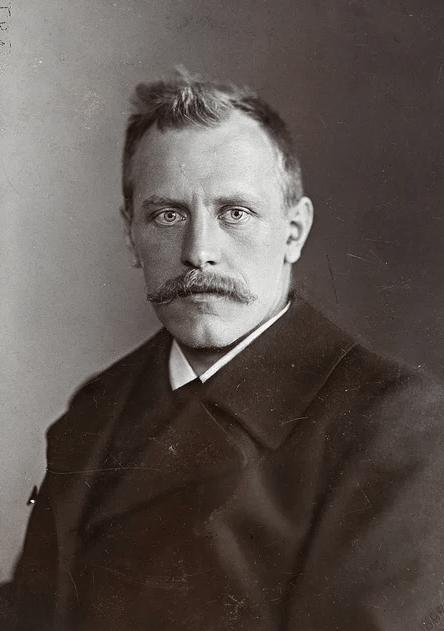
As someone who works extensively with the British Newspaper Archive, I often find myself going down research rabbit holes, meandering through all sorts of articles that sidetrack me from my original objective. This week, my attention has been pulled towards Nansen’s visit to the UK during his 1897-98 lecture tour. For a more scholarly analysis of Nansen as a transnational celebrity and his reception in Britain, I highly recommend Max Jones’ excellent paper in The Journal of Modern History. Here, instead, I want to transcribe an article from The Illustrated London News (13 February 1897) entitled ‘Dr Nansen’s Visit’, which reports on his visit to London. Nansen was so warmly received and celebrated with such enthusiasm. I only wish more people today in the UK still knew his name.
Dr Nansen’s Visit
If Dr. Nansen had been one of ourselves, we really could not have made more of him than we have been doing. His welcome in London has been of the heartiest sort, and he is sure to find it continued in the provinces. It is not always that we take a man of foreign blood to the national bosom. When we do make an exception, we are thorough; only many people would say that Nansen is hardly to be thought a foreigner. The allusion, of course, is twofold. He is of a race whose blood we have, in a measure, ourselves, and his name, his personality, and his Arctic works have become matters of everyday familiarity to us. He struck the note of kinship himself when he declared, in effect, in one of his speeches, “If I have been able to do anything it is because I have studied well your English explorers of Polar regions.”
This was at the dinner given in his honour by the learned members of the Royal Societies Club. The affair took place at the excellent quarters in St. James’s Street, where the savants meet to smoke the peace-pipe; and, to be quite precise, the date was Friday, Feb. 5, the hour of foregathering 7 p.m. Dr. Nansen is a man of method and accuracy, and he was present in ample time to see even the early guests arrive, and to give them a good welcome. Then, when Sir Clements Markham had done the same, a hearty grip of the hand. There is no talking of the crowd of scientists who thus offered congratulations to the explorer, and, indeed, everything that is best in our public life was represented.
A word as to how Dr. Nansen looked then and at other times, and it might be a brief word, for he just looked himself. He may be a shade under or a shade over six feet; but either way, he is a fine fellow. His loosely knit frame betokens power, his elasticity combined with the rugged strength of some hard-wood tree. Seeing him, with his broad shoulders, his long grasp of arm, and his clean-cut loins, one would fancy it was only such a figure that could cross Greenland on foot, or accomplish terrible sledge journeys with Johansen. Thoughtful blue eyes sit in a face which tells at once of a kind heart, of generous thoughts, and of a resolution as irresistible as the coming of an Arctic berg. The evening dress which a high civilisation makes compulsory, the Norwegian Order of St. Olaf glittering on the left breast, perhaps the red ribbon of the order hanging from the shoulder—that is Dr. Nansen as thousands have got sight of him, say at the great Albert Hall meeting.
Here was really the outstanding event of his visit, for it was the social note that fell away alike when he was the guest of the Royal Societies Club and of the Savage Club on the following evening. The Albert Hall gathering which brought him to Monday evening implied something more serious than light, wholesome chat as to the complete Savage he had been in appearance less than a year ago, more serious even than the scratching of his signature anew on the walls of the widely known and deeply valued Terrace. At the Albert Hall Dr. Nansen was under the official auspices of the Geographical Society, and his lecture was a set account of his expedition rendered to the geographers. Such an audience is only drawn together once in a while—for example a Stanley returns from “Darkest Africa” or, on the other hand, when a Patti sings. The Prince of Wales was there, and so were the Duke and Duchess of York. There was a whole row of the diplomatists who are accredited to the Court of St. James’s, and our Arctic travellers made a goodly quorum. Certainly it was a notable picture, and one not readily to be forgotten.
As is well known by this time, Dr. Nansen speaks English with easy fluency, and with only an accent sufficient to give piquancy to his speech. He told the story of his expedition in a simple and modest way, which made every listener a friend and something of a hero-worshipper. Often in a single sentence he succeeded in conveying that sense of Arctic scenery and life which explorers find so elusive when they sit down with pen in hand. “These Polar regions,” one touch of description ran, “with the moon travelling on its way through the silent night, make you think you have left this globe and gone to some strange world where there is nothing but marble and white snow.” Again, people were keenly touched by the extracts from his diary in which he had set down Christmas as it was being celebrated at home and the Christmas desolation and bear’s meat three times a day that waited on himself and Johansen. All in the Albert Hall agreed that Dr. Nansen had richly earned the special gold medal with which the Prince of Wales presented him on behalf of the Geographical Society.
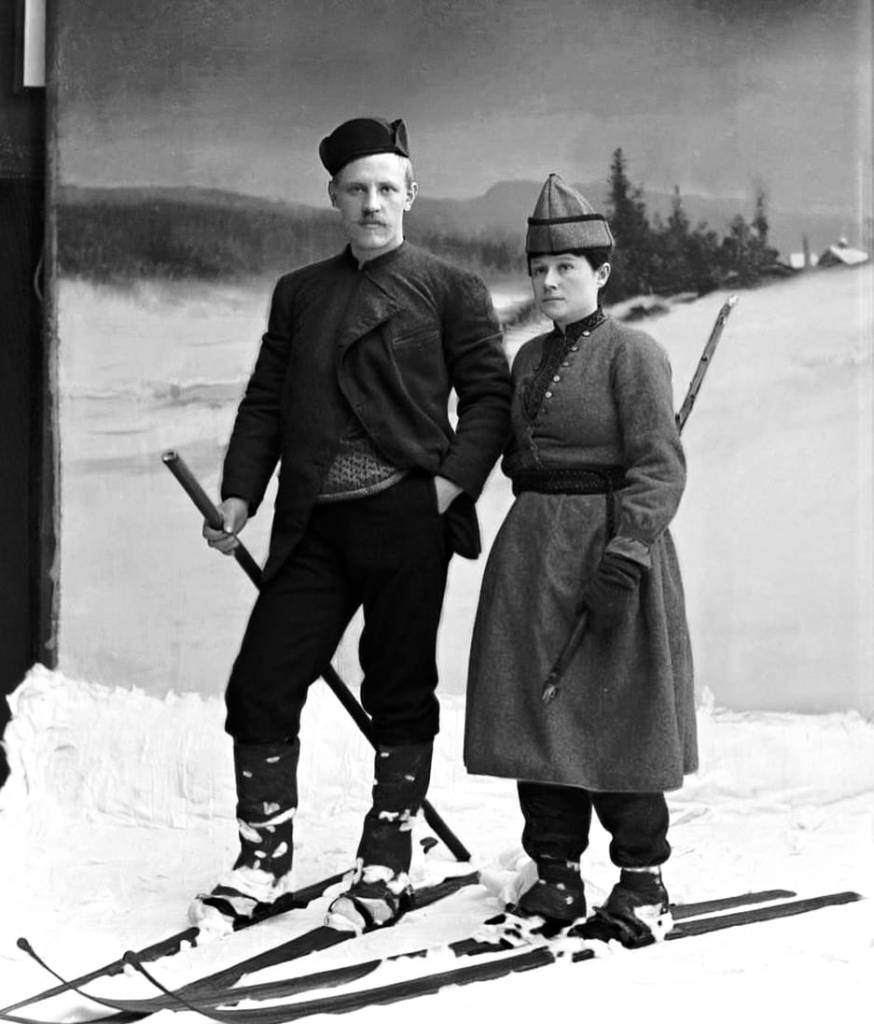
In the welcome extended to the explorer Mrs. Nansen and Lieutenant Scott-Hansen shared. There is no need to speak of the private hospitality showered upon the party, but mention might be made of the lectures at the St. James’s Hall. They actively opened the Nansen lecturing tour.
 Forgotten Fridtjof
Leave a comment