NANSEN’S LEGACY
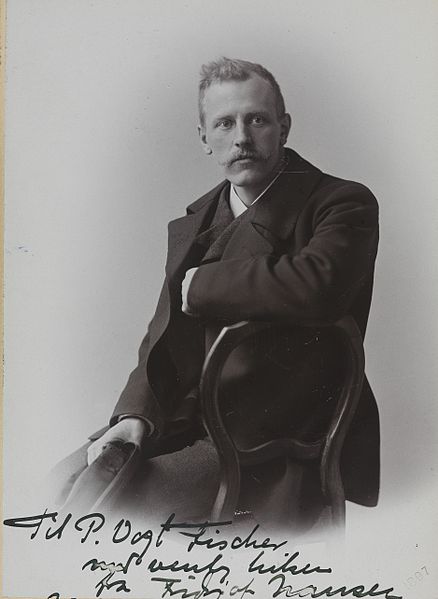
Fridtjof Nansen’s innovations and compassion have left a lasting impact on the world
Even as he juggled numerous responsibilities, Nansen continued to take skiing holidays whenever possible. In February 1930, at the age of 68, he spent a short mountain retreat with two old friends, who observed that he seemed slower and more easily fatigued than before. Shortly after returning to Oslo, he fell ill, first with influenza and later with phlebitis, during which King Haakon VII visited him at his bedside.
Nansen passed away from a heart attack on 13 May 1930. His cremation was marked by a non-religious state funeral at his Polhøgda estate, where his ashes were placed beneath a tree. His daughter Liv later recalled that the ceremony was devoid of speeches, with only Schubert’s Death and the Maiden, a piece cherished by his wife Eva, providing the musical accompaniment.
During his lifetime and long after, Nansen received widespread recognition for his achievements. Lord Robert Cecil, a fellow delegate at the League of Nations, described him as a tireless advocate for justice and humanitarian causes: “Every good cause had his support. He was a fearless peacemaker, a friend of justice, an advocate always for the weak and suffering.”
Scientific and Polar Exploration Legacy
Nansen’s polar expeditions succeeded largely because of his ingenuity and meticulous engineering. He reimagined nearly every aspect of the equipment used in extreme conditions, creating tools and methods that would become standard for explorers:
– Nansen sledge – A lighter, stronger sled with wide, ski-like runners, optimised for Arctic and Antarctic travel.
– Nansen cooker – A stove designed to maximise heat efficiency, improving upon the conventional spirit stoves of the time.
– Nansen bottle – An innovative device for collecting water samples at precise depths without contamination, which remained a cornerstone of oceanographic research for decades.
– Wind-powered generator on the Fram – Provided intermittent electric lighting during the Arctic winter by converting wind energy to electricity.
– Layered clothing principle – Nansen pioneered the use of lightweight, layered clothing for polar expeditions, replacing cumbersome traditional garments and improving both mobility and insulation.
– Skiing techniques – Nansen played a pivotal role in transforming skiing from a practical mode of winter transportation into a sport. As a champion skier and ice skater, he also set the world record for the one-mile speed skating distance in his youth.
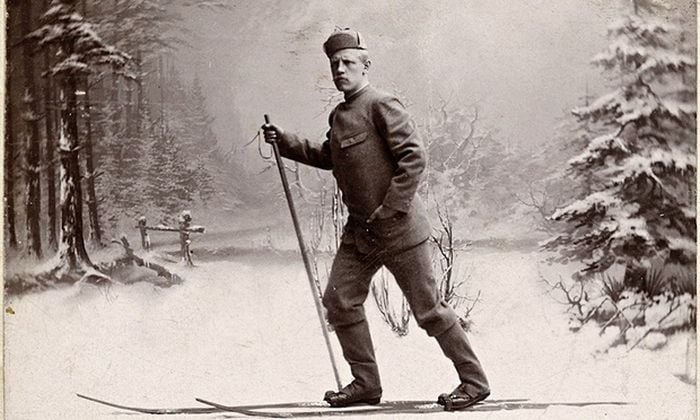
Beyond exploration, Nansen made significant scientific contributions:
– Neurology – He was an early contributor to the study of the nervous system, recognsed today as one of the founders of modern neurology.
– Oceanography – He helped establish the Central Oceanographic Laboratory in Christiania (Oslo) and investigated phenomena such as “dead water,” where layers of freshwater over saltwater slow ships’ progress – an important discovery for maritime navigation.
Diplomatic and Humanitarian Legacy
After Nansen’s death, the League of Nations created the Nansen International Office for Refugees to continue his work with displaced people. Despite the challenges posed by the refugee crises of the 1930s, the office successfully secured agreement from 14 countries, including a hesitant Great Britain, to the 1933 Refugee Convention. In recognition of these efforts, the Nansen Office received the Nobel Peace Prize in 1938.
The United Nations later established the Nansen Refugee Award, originally called the Nansen Medal, which is awarded annually to individuals or organisations demonstrating exceptional service to forcibly displaced people.
Other Honours
Nansen’s name has been memorialised across the globe and even in space:
– Geographical features – The Nansen Basin and Nansen-Gakkel Ridge in the Arctic Ocean; Mount Nansen in Yukon, Canada; Mount Nansen, Mount Fridtjof Nansen, and Nansen Island in Antarctica; Nansen Island in the Kara Sea; and Nansen Land in Greenland.
– Celestial honours – The asteroid 853 Nansenia, a crater on the Moon’s north pole, and a Martian crater all bear his name.
– Institutions – His Polhøgda estate now houses the Fridtjof Nansen Institute, which conducts research on environmental, energy, and resource management policy.
– Vessels – The Norwegian Navy’s Fridtjof Nansen-class frigates were named in his honour, with the first ship launched in 2004, and the cruise ship MS Fridtjof Nansen was launched in 2020.
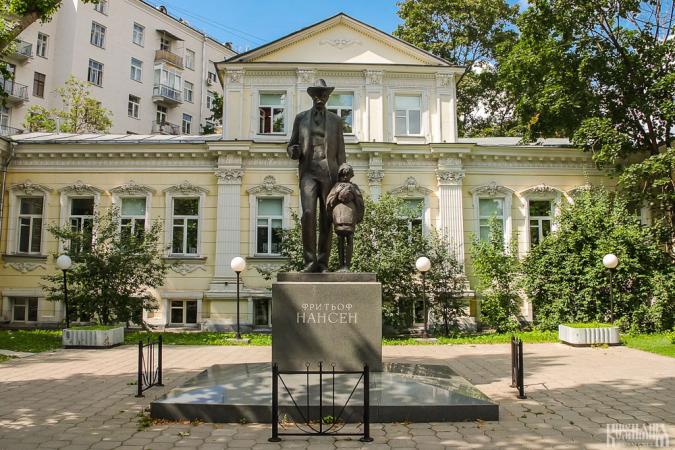
– Statues – Vardø; Moscow; Nansen Museum in Yerevan
– Archives –United Nations Office at Geneva (Documents on Nansen’s refugee work and League of Nations activities); National Library of Norway (large Nansen photo archive); University of St Andrews (Nansen lithographs and letters); Scott Polar Research Centre (Nansen letters), to name but a few
Cultural Influence
Nansen’s life and achievements have been portrayed in film and television:
– 1948 – Scott of the Antarctic, featuring Stig Egede-Nissen as Nansen.
– 1968 – Just a Life: the Story of Fridtjof Nansen, a Norwegian-Soviet biographical film with Knut Wigert in the lead role.
– 1985 – TV series The Last Place on Earth, with Max von Sydow as Nansen
– 2019 – Film Amundsen, in which Trond Espen Seim played Nansen.
 Forgotten Fridtjof