NANSEN THE DIPLOMAT
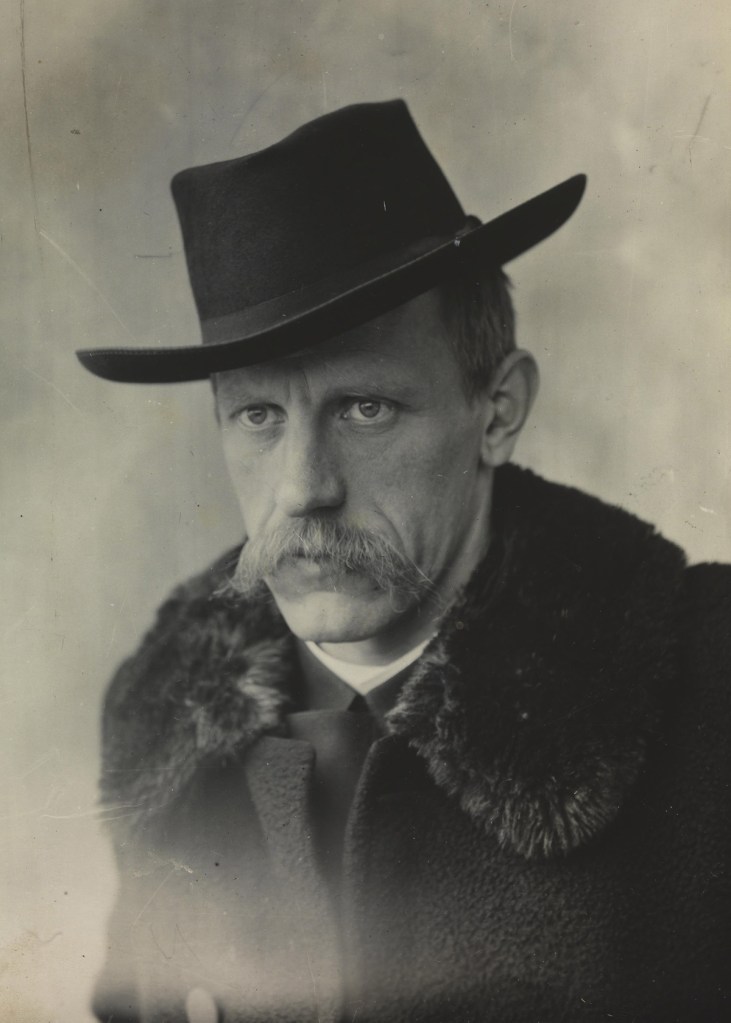
By the early 1900s, Fridtjof Nansen’s fame as a polar explorer had made him one of Norway’s most respected public figures. His voice carried weight, and he used it to speak out on issues of national importance.
The union between Norway and Sweden had been under increasing strain throughout the 1890s, and Nansen was an outspoken defender of Norwegian interests, contributing articles to Ringeren, an anti-union magazine. When negotiations between the two countries collapsed in February 1905 and the Norwegian government fell, a new administration under Christian Michelsen pushed for full independence. Nansen firmly aligned himself with the separatist cause.
Though he had no desire for political office, Nansen played a key diplomatic role at Michelsen’s request. He travelled to Berlin and London, publishing a letter in The Times to present Norway’s legal case for a separate consular service to the English-speaking world. On 17 May 1905, Norway’s Constitution Day, Nansen addressed a vast crowd in Christiania, declaring: “Now have all ways of retreat been closed. Now remains only one path, the way forward, perhaps through difficulties and hardships, but forward for our country, to a free Norway.” He also wrote a book, Norway and the Union with Sweden, to strengthen support for independence abroad.
The political struggle intensified. On 23 May, the Storting passed the Consulate Act, establishing a separate Norwegian consular service. King Oscar refused assent, and when the cabinet resigned on 27 May, the king refused to acknowledge their action. Finally, on 7 June, the Storting unilaterally declared the dissolution of the union. The Swedish government agreed to let the Norwegian people decide through a referendum, held on 13 August 1905, which overwhelmingly confirmed independence. King Oscar relinquished the Norwegian crown, while retaining his Swedish throne.
A second referendum in November determined that Norway would remain a monarchy. Michelsen’s government considered several candidates for the throne, ultimately selecting Prince Charles of Denmark, since the Bernadotte family could not provide a successor acceptable to both countries. Nansen was sent on a secret mission to Copenhagen to persuade Charles to accept the Norwegian crown – a task he accomplished successfully. Charles took the name Haakon VII and, with his British wife Princess Maud, was crowned in Nidaros Cathedral on 22 June 1906.
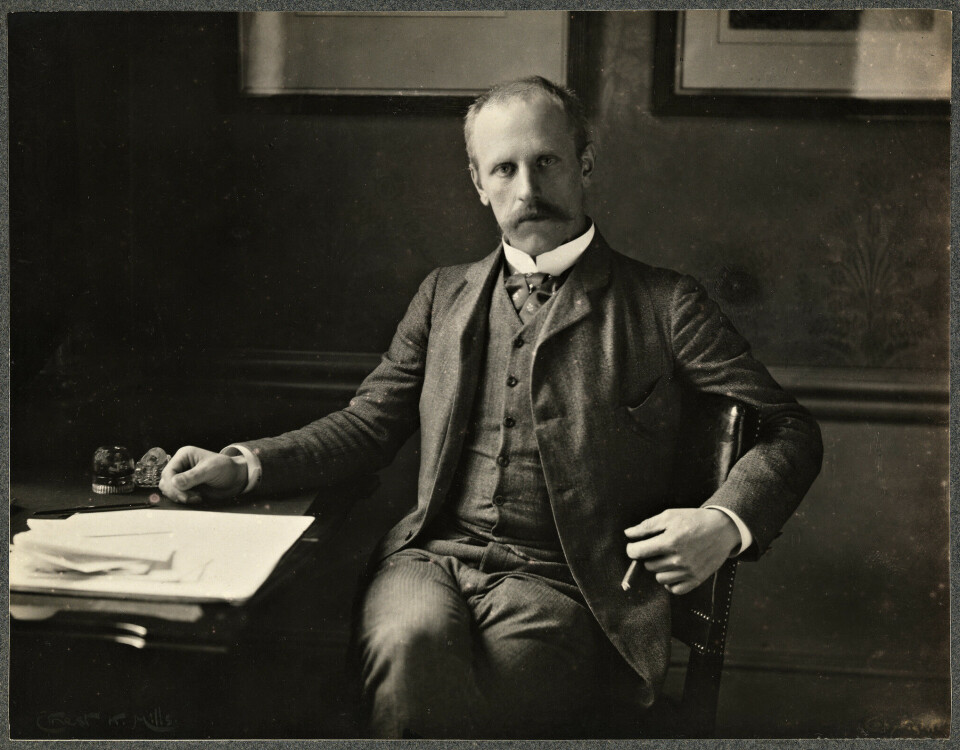
In April 1906, Nansen was appointed Norway’s first Minister in London. His main responsibility was negotiating an Integrity Treaty with the major European powers to guarantee Norway’s sovereignty. Though he found court life and diplomatic duties “frivolous and boring”, Nansen quickly gained respect and popularity in England, maintaining connections with the Royal Geographical Society and other scientific circles. The Treaty was signed on 2 November 1907, and with his mission complete, Nansen resigned on 15 November, declining King Edward’s pleas to remain in London.
After this, Nansen largely avoided domestic politics. However, in 1924, former Prime Minister Christian Michelsen persuaded him to join the Fatherland League, a new anti-communist political group concerned about the rising influence of Norway’s Labour Party. At the League’s inaugural rally in Oslo, Nansen warned against revolutionary rhetoric: “To talk of the right of revolution in a society with full civil liberty, universal suffrage, equal treatment for everyone … [is] idiotic nonsense.”
Nansen remained active with the League for several years. In 1926, an independent petition even considered him as a potential head of a centre-right national unity government. He continued speaking at major rallies, including the League’s largest in Tønsberg in 1928, attended by 15,000 people, and went on a final tour in 1929 aboard the ship Stella Polaris, delivering speeches from Bergen to Hammerfest.
 Forgotten Fridtjof