NANSEN THE HUMANITARIAN
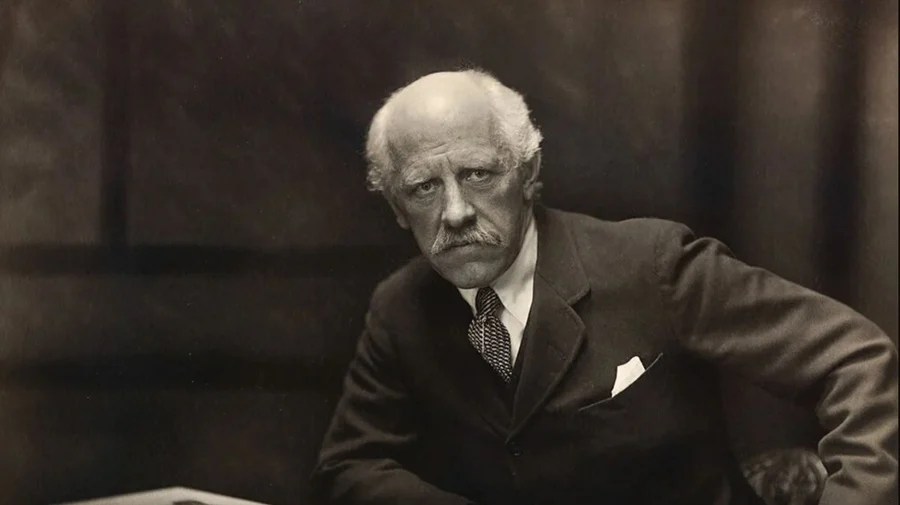
After World War I, Fridtjof Nansen turned his restless energy from exploring the polar frontiers to addressing some of the world’s most urgent humanitarian crises.
When the First World War broke out in 1914, Norway declared neutrality alongside Sweden and Denmark. Nansen was appointed president of the Norwegian Union of Defence. As the war dragged on, Norway faced severe shortages of food, worsened in April 1917 when the United States entered the conflict and further restricted international trade. Nansen was sent to Washington to negotiate relief, and after months of careful discussion, he secured food and supplies for Norway in exchange for a rationing system. When his government hesitated, Nansen boldly signed the agreement on his own initiative, ensuring the survival of the population.
With the war’s end in November 1918, the creation of the League of Nations offered Nansen a new platform for his energies. He became president of the Norwegian League of Nations Society and helped secure Norway’s full membership in 1920, subsequently serving as one of the country’s three delegates to the League’s General Assembly.
In April 1920, at the League’s request, Nansen began organising the repatriation of around half a million prisoners of war stranded across Europe, including 300,000 in Russia, where civil war and political upheaval complicated matters. By November 1920, he was able to report that approximately 200,000 had returned home. Over the next two years, his efforts resulted in the repatriation of 427,886 prisoners to around 30 countries – a feat the League described as “heroic endeavour worthy of those in the accounts of the crossing of Greenland and the great Arctic voyage.”
On 1 September 1921, at the urging of British delegate Philip Noel-Baker, Nansen accepted the position of High Commissioner for Refugees under the League of Nations. His primary mission was the resettlement of roughly two million Russian refugees who had been uprooted by the turmoil of the Russian Revolution and the subsequent civil war. Many of these refugees were stranded across Europe and neighbouring regions, with little to no legal recognition, possessions or means to survive.
One of the greatest obstacles Nansen faced in helping refugees was their lack of legal identity. Millions of displaced Russians had no official documents proving their nationality, leaving them effectively stateless and unable to travel, work, or settle safely in other countries. In response, Nansen devised one of his most innovative solutions: the “Nansen passport.” This document provided refugees with a recognized legal identity, allowing them to cross borders, seek employment, and rebuild their lives. Originally created for Russian refugees, the passport quickly gained international acceptance, eventually being recognized by more than 50 governments. Beyond its immediate practical effect, the Nansen passport became a pioneering model for international humanitarian law and set a precedent for the protection of stateless populations worldwide.
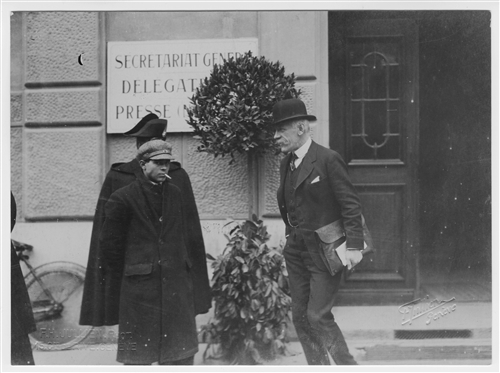
At the same time, Nansen confronted an even more urgent crisis: famine in Soviet Russia. A catastrophic failure of crops across vast swathes of the country left nearly 30 million people at risk of starvation. Nansen personally appealed to the Soviet government to allow international assistance and lobbied the League of Nations to provide aid. Yet the revolutionary regime’s isolationist policies and widespread distrust of Western powers created enormous obstacles, and the League itself was hesitant to act decisively. Undeterred, Nansen turned to private organisations, mobilising aid from national Red Cross societies, charitable foundations and sympathetic governments. He coordinated the delivery of food, medical supplies and clothing to millions, often negotiating directly with local authorities and relief organisations to bypass bureaucratic roadblocks.
Following the Greco-Turkish War of 1919–1922, Nansen travelled to Constantinople to negotiate the resettlement of hundreds of thousands of refugees, mostly ethnic Greeks fleeing Turkey. Recogniding that Greece lacked the resources to absorb them, he devised a population exchange plan: half a million Turks in Greece returned to Turkey with financial compensation, while additional loans facilitated the integration of Greek refugees into their homeland. Despite some controversy, the plan was successfully implemented over several years.
In November 1922, Nansen was awarded the Nobel Peace Prize. The citation honoured “his work for the repatriation of the prisoners of war, his work for the Russian refugees, his work to bring succour to the millions of Russians afflicted by famine, and finally his present work for the refugees in Asia Minor and Thrace.” He donated the prize money to international relief efforts.
From 1925 onwards, Nansen focused on helping Armenian refugees, victims of the Armenian genocide and subsequent mistreatment. His aim was to establish a national home for them within Soviet Armenia. He proposed an irrigation and settlement scheme covering 360 square kilometres, designed to house 15,000 refugees. Though the plan ultimately failed due to insufficient funding, Nansen’s advocacy earned him enduring respect among the Armenian people. He documented these efforts in Armenia and the Near East (1923), followed by Across Armenia (1927) and Through the Caucasus to the Volga (1930).
Within the League’s Assembly, Nansen spoke out on a wide range of issues beyond refugee work. He emphasised that small countries like Norway could leverage the Assembly to influence global affairs. He considered the League’s success in reducing armaments a key measure of its credibility, and he signed the 1926 Slavery Convention to combat forced labour. He also played a pivotal role in post-war diplomacy, supporting the settlement of reparations and championing Germany’s admission to the League in September 1926 after meticulous preparation.
 Forgotten Fridtjof