NANSEN THE SCIENTIST
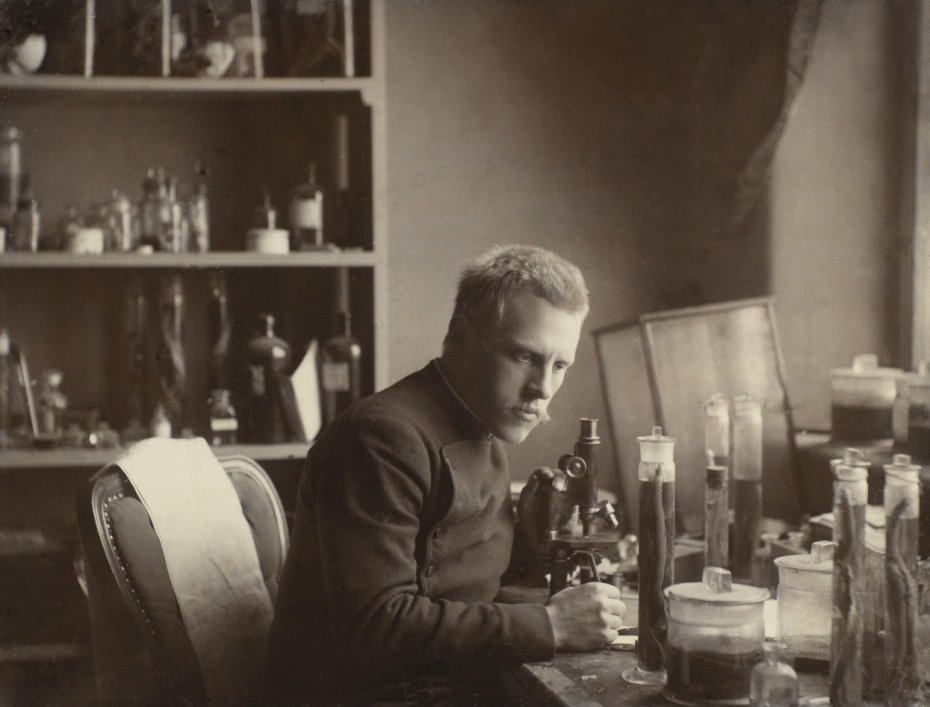
Fridtjof Nansen was a groundbreaking scientist, making major contributions to zoology and oceanography. His curiosity about the natural world would eventually shape his explorations, guiding him from the lab to the ice, where science and daring went hand in hand.
Nansen passed his university entrance exam in 1880 and decided to study zoology at the Royal Frederick University in Christiania in early 1881. In 1882, he took what he later called “the first fatal step that led me astray from the quiet life of science,” when Professor Robert Collett invited him on a sea voyage to study Arctic zoology firsthand.
Nansen eagerly joined the sealer Viking for a five-month expedition between Greenland and Spitsbergen. There, he conducted pioneering research, discovering that sea ice forms on the surface of the water rather than beneath it, and confirming that the Gulf Stream flows under a cold surface layer. Alongside his scientific work, Nansen gained practical skills: he became an expert marksman and once recorded that his team had hunted 200 seals in a single day. When Viking became trapped in the ice near an uncharted part of Greenland’s coast, Nansen dreamed of exploring the icecap itself – an idea that would shape his future expeditions.
Back in Norway, Nansen chose to forgo formal university study and accepted a curator position at the Bergen Museum, working with leading scientists such as Gerhard Armauer Hansen, who discovered the leprosy bacillus, and Daniel Cornelius Danielssen, who had transformed the museum into a centre of research and education. Nansen focused on neuroanatomy, studying the central nervous systems of lower marine animals. In 1886, he published a paper arguing that “anastomoses or unions between the different ganglion cells” could not be demonstrated – a view later confirmed by contemporary researchers. His 1887 work, The Structure and Combination of Histological Elements of the Central Nervous System, became his doctoral thesis and earned him recognition as a defender of the neuron theory in Norway.
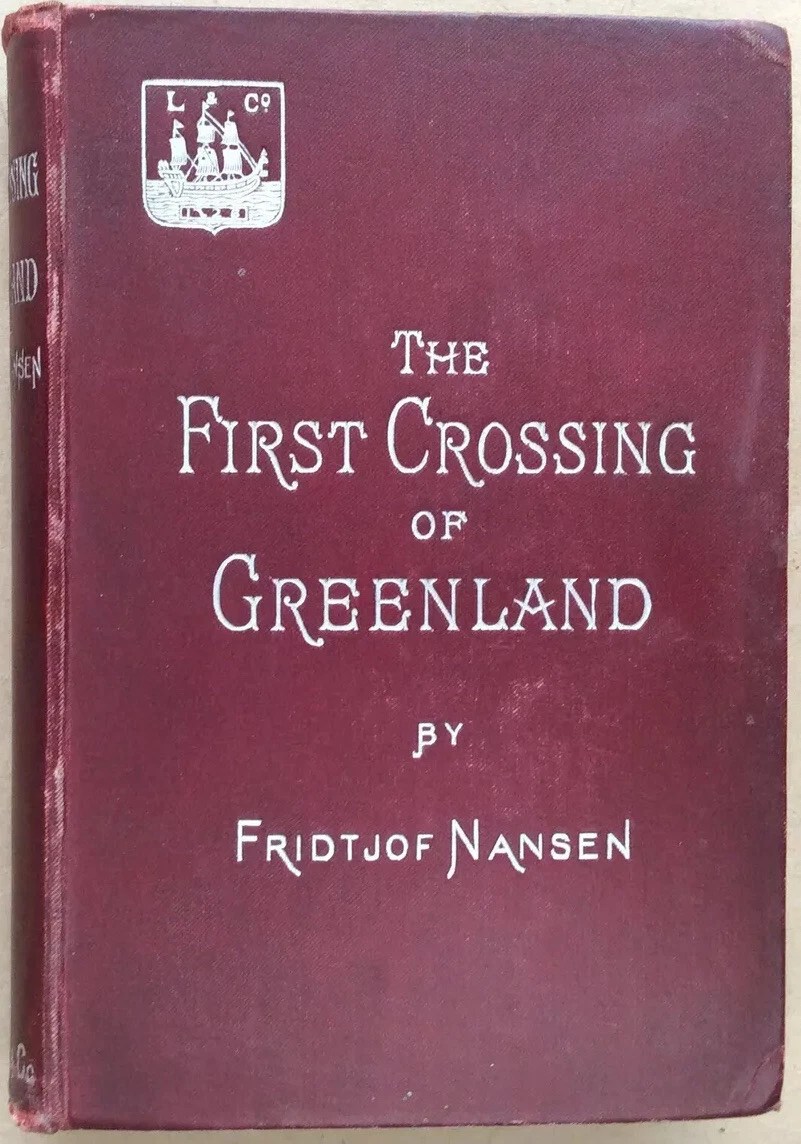
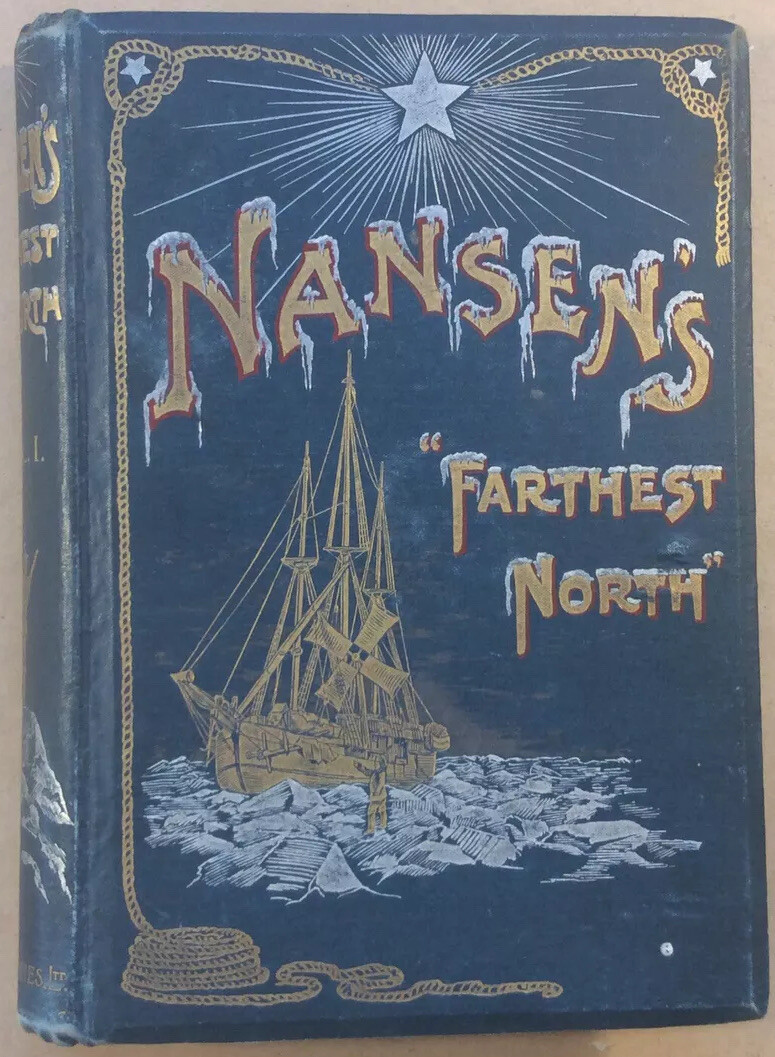
As he prepared for his historic Greenland crossing in 1887, Nansen defended his thesis, leaving for the Arctic before learning the results. It wasn’t until reaching Nuuk several months later that he discovered he had successfully completed his doctorate. Following Greenland, he documented his journey in the book The First Crossing of Greenland – a template he would repeat after the Fram expedition with Farthest North, which became an instant success.
For the next two decades, Nansen continued to advance science. In 1897, he became a professor of zoology at the Royal Frederick University, overseeing the scientific reports of the Fram expedition, eventually published in six volumes. Polar scientist Robert Rudmose-Brown later compared the work to the Challenger expedition, noting its transformative impact on Arctic oceanography. That same year, Nansen was elected an International Member of the American Philosophical Society, cementing his global scientific reputation.
In 1900, he became director of the International Laboratory for North Sea Research and helped establish the International Council for the Exploration of the Sea. That summer, he returned to Arctic waters aboard the research vessel Michael Sars, exploring Iceland and Jan Mayen Land.
By 1908, Nansen changed his professorship from zoology to oceanography, reflecting his growing interest in the dynamics of the seas. He contributed the data that led to the Ekman spiral, a fundamental principle in oceanography, and in 1909 co-published The Norwegian Sea: Its Physical Oceanography. Between 1910 and 1914, he undertook multiple research voyages, including expeditions aboard the naval vessel Fridtjof and his own yacht Veslemøy, studying salinity in the North Polar Basin.
Nansen also documented the history of Arctic exploration at the request of the Royal Geographical Society, resulting in In Northern Mists, a two-volume account of northern discoveries up to the early 16th century. In 1913, he travelled to the Kara Sea to study potential trade routes between Europe and Siberia, returning via the Trans-Siberian Railway and publishing his observations in Through Siberia.
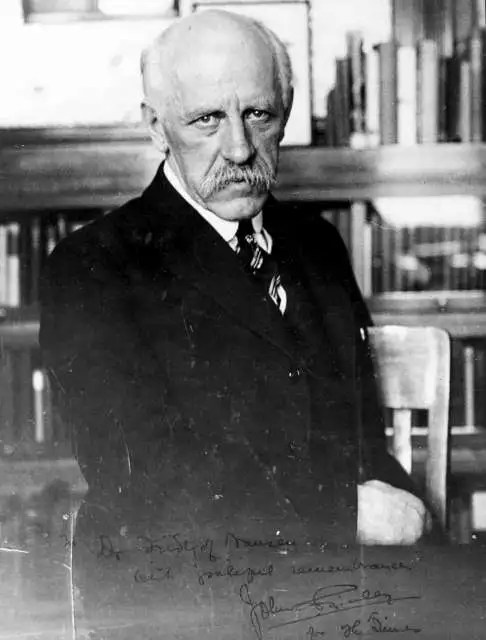
Even with his increasing international commitments (see Nansen the Humanitarian), Nansen continued to publish scientific papers and deliver lectures. In 1925, he delivered a poignant memorial oration for Roald Amundsen, who had vanished in the Arctic while leading a rescue mission for Umberto Nobile after his airship crashed. The following year, Nansen was honoured as the first foreign Rector of the University of St Andrews in Scotland. In his inaugural address, he reflected on his life and philosophy, using the moment to inspire a new generation of scholars and explorers.
 Forgotten Fridtjof