Polar exploration is full of tragic stories. The fate of John Franklin’s expedition, polar madness on the Belgica, Robert Falcon Scott and his four companions dying on their return from the South Pole…
But for me, the story that impacts me most is one where the tragedy did not occur on the ice, but rather back home from a self-inflicted gunshot in a park in Oslo.
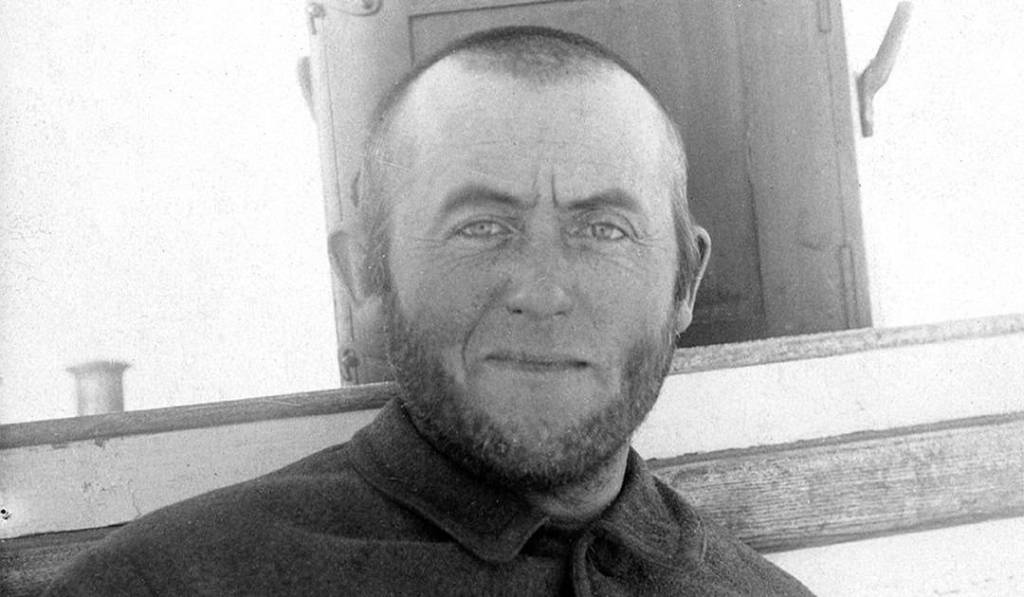
I’m talking about Hjalmar Johansen, a deeply skilled but troubled polar explorer, who is today remembered as Norway’s ‘Third Man’, forever confined to the shadows behind Nansen and Amundsen.
Johansen was born into a farming family on this day in 1867. As a young man, he devoted himself to gymnastics, becoming world champion in 1889, and was also an excellent skier. But despite his physical gifts, he struggled to find direction. He drifted between jobs, wrestled with the pressures of expectation and developed a drinking problem that would follow him throughout his life.
When Nansen began assembling his team for the Fram expedition, Johansen saw an escape. So determined was he to join that he offered to go without pay. Nansen accepted him – and would later ensure he was paid – bringing him on initially as a stoker and dog handler.
In the Arctic, Johansen found a measure of peace. When Fram froze into the ice, he assisted Sigurd Scott-Hansen with meteorological observations, but it was in the field that he truly excelled. Nansen chose him as his sole companion for the bold dash towards the Pole. Together, they reached 86°14′ north – further than anyone before them.
Nansen later wrote of Johansen with deep respect, describing him as strong and utterly reliable under the harshest conditions. During their journey, Johansen proved his courage time and again – at one point fighting off a polar bear with his bare hands (before Nansen scrabbled for his gun to shoot it), consistently demonstrating the type of toughness that polar survival demanded.
But back in Norway, old struggles returned. Johansen found it difficult to settle into ordinary life. He married in 1898, but the relationship broke down. He served in the army and rose to the rank of captain, but as his drinking worsened, he was forced to resign.
Still, he could not stay away from the Arctic. Between 1907 and 1909, he joined several expeditions to Svalbard, including wintering with Theodor Lerner in Spitsbergen.
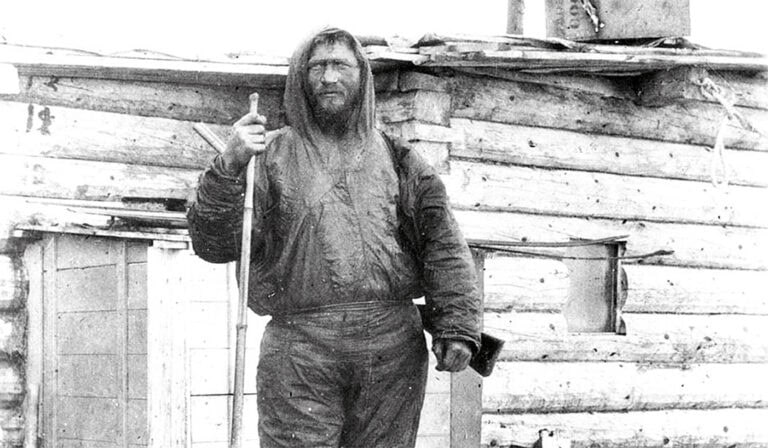
Throughout these years, Nansen remained a constant presence in Johansen’s life. Since their expedition together, Nansen had felt a certain responsibility for him. Time and again, he helped Johansen back onto his feet, offering financial support, finding him opportunities and intervening when his life began to drift off course.
So, when Roald Amundsen began planning his expedition to the North Pole (only, of course, to make an about face and head south instead), it was Nansen who recommended Johansen, giving him yet another chance. Although Amundsen was initially reluctant, he accepted Johansen onto the team, swayed by the trust Nansen placed in him.
What followed would define the final chapter of Johansen’s life.
In September 1911, Amundsen decided to make an early advance to the South Pole from his base camp at the Bay of Whales. Johansen warned him that it was too early in the season, but he refused to listen. The party set out, but were soon forced to retreat by a fierce blizzard.
In the chaos that followed, Amundsen split the group and hurried back to base with the strongest dogs, leaving others behind. Among them was the young lieutenant Kristian Prestrud, who was suffering from severe frostbite. Johansen stayed with him. With no tent or cooking equipment, the two men undertook a forced 75km march in -60°C back to camp, Johansen carrying Prestrud part of the way.
When they arrived, Amundsen was already sitting by the warm fire. Johansen, exhausted and furious, confronted him openly in front of the others, condemning the decision and the risk it had placed on the men. His words were cutting: “I don’t call that an expedition. I call it panic!”
Amundsen, usually controlled and calculating, saw this as insubordination. He angrily informed Johansen that he would be removed from the South Pole team. Unable to believe it, Johansen asked for confirmation in writing, which Amundsen later provided. And so, the most experienced polar traveller in the party was officially sidelined.
To add insult to injury, Johansen was instead assigned to a secondary expedition to King Edward VII Land, placed under the command of Prestrud – the very man whose life he had just helped save. It was, by any measure, a profound humiliation.
Amundsen’s main party went on to reach the South Pole successfully. But Johansen’s treatment did not improve. When the expedition landed in Tasmania, Amundsen dismissed him from the Fram, paid him off and ordered him to return to Norway separately. The remaining crew were instructed to remain silent about the internal conflicts of the journey, leaving Amundsen with sole control of the narrative in his published account.
Johansen returned home not as a hero, but as an afterthought. His contributions were barely acknowledged. His courage, including the saving of Prestrud, was omitted from Amundsen’s book. It’s hard not to imagine how deeply this must have cut. A man of such skill, such experience, reduced to a footnote in someone else’s triumph.
Just a few months later, in January 1913, he took his own life.
Johansen was not an easy man. He carried his flaws, his struggles and demons. But he was also brave, loyal and instrumental to some of the greatest achievements in polar exploration.
Now, I respect and admire Amundsen, but for all his brilliance, he could be rigid and unforgiving – even cruel at times – towards those who challenged him. Perhaps he felt he could not afford dissent. Perhaps he needed to assert himself as leader. Perhaps he knew, deep down, that Johansen had been right.
So, on this day of his birth, I hope you too will spare a thought for Hjalmar Johansen not as Norway’s ‘Third Man’, but as a pioneering explorer who pushed the limits of human endurance and paid a high personal price for his courage and integrity.
If ever there was a man done wrong, it was him.


Leave a comment