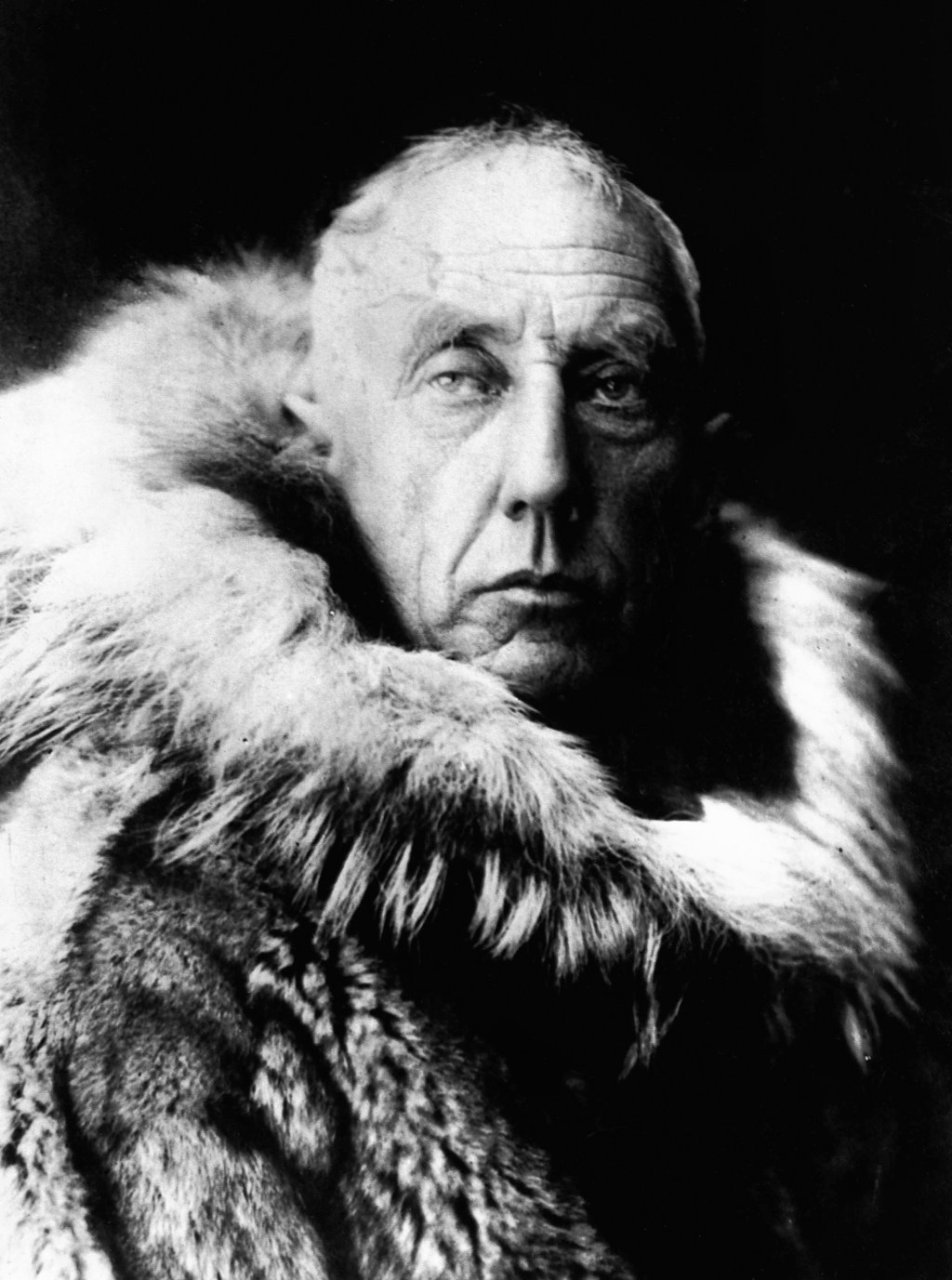
Today marks 98 years since Amundsen disappeared while flying on a rescue mission in the Arctic. The mission was launched in response to the crash of the airship Italia, commanded by Umberto Nobile, which had gone down on the pack ice north of Svalbard, leaving part of its crew stranded in brutal conditions.
Amundsen joined the international rescue effort and departed from Tromsø aboard a Latham 47 seaplane, accompanied by a small crew that included the experienced pilot René Guilbaud. Shortly after takeoff, the aircraft vanished into heavy fog over the Barents Sea.
In the months that followed, a massive multinational search operation was launched, involving ships, aircraft and coastal patrols. Despite the scale of the effort, no trace of the crew was ever found beyond a few fragments of wreckage recovered from the sea weeks later.
At last year’s Terror Camp, Anders Bache, a consultant at Roald Amundsen’s House was asked a very interesting question: if he had the chance to meet Amundsen, what would he ask him? His response has stayed with me: what made you go on that rescue mission? Amundsen was known for being careful and meticulous, a planner above all else. So why, after receiving that phone call, did he so spontaneously choose to go?
I too have often asked myself the same question.
When I first learnt this story – such a sad end to a truly phenomenal explorer – I found myself clinging to the hope that the absence of a body might mean that he somehow survived. Before even looking into the many theories out there, I convinced myself that it was perfectly plausible that a man who had learnt so much from the Inuit might somehow have gone off to live quietly among them. I later learnt that was, in fact, one of the many theories of his fate – that he had somehow reached Greenland, been rescued by the Inuit and chose never to go back to Norway.
Okay, it most likely is definitely not what happened, but it’s a story that feels true to the man. After all, if anyone could have done it, it would have been Amundsen.
Amundsen was arguably the most adaptable of all the polar explorers (even if, for me personally, Nansen holds that spot). As a young man, he learnt directly from the Netsilik Inuit about Arctic survival skills: how to travel efficiently with dog sledges, how to dress in furs rather than rely on heavy European gear, how to read the ice, the weather, the subtle shifts in the landscape. He understood survival as harmony with the environment. That type of knowledge might have enabled him to belong just as naturally there as anywhere else in the world.
And beyond the practical skills, there was his temperament. He was disciplined, self-contained and comfortable with solitude. He wasn’t driven by spectacle in the way some explorers were; he was methodical, quiet and purposeful. It’s not hard to imagine that, given the chance, he might have chosen a life away from the pressures of fame, expectation and the creditors to whom he owed money.
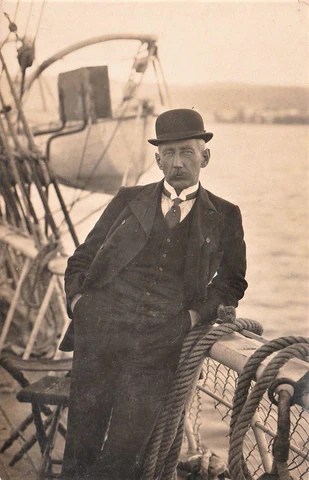
So, when I think of Amundsen, I like to imagine him just like that – tipping his hat and, with a smile, going off into the sunset and simply never looking back.
Since this is a Nansen blog, it feels fitting to end with the great man’s own words. Below is an English translation of the memorial speech he gave on 24 October 1928 in the Festival Hall at the University of Oslo, organised by the National Geographical Society. The speech had such an impact that Nansen later recorded a shorter version on 9 January 1930 that was released as a gramophone recording:
When thoughts heavy with sorrow seek him, our great, solitary countryman in the icy north, where his strong spirit took flight over the plateau, I am reminded of some lines by the poet of the northlands, [Robert] Service. They can be rendered roughly like this: “Have you known the great, white silence? Dared the unknown, trodden the untrodden ways, marked the map’s white spots? Have you yearned, hungered, triumphed, grown bigger in the bigness of the whole, done things merely for the excitement of the deed, and let others talk of it? Have you seen God in His splendour, heard the text that nature renders, seen the simple things, the true things, the silent men who do things – Then hearken to the Wild – it’s calling you.”
Yes, the wild, the unknown, with the sheen of deed and adventure over the ocean’s brow, it called ever for him, our proud friend, until it took him in the end.
He was a man of the deed, precisely one of those silent men who do things. [Thomas] Carlyle speaks of the old Norwegian sea-kings with their indomitable, bear-strong willpower. He sees them standing there on their small ships, silent, with dogged lips, unconscious that they are particularly brave, defying the wild ocean with its monsters, and all humans and things. Is this not as if spoken also of him, our own era’s Roald Amundsen? He was a true sprout of this old tree.
Those attributes, our sagas hold in highest regard in a man was firstly the unbending courage, that did not yield, but had to let it brace of break – secondly the bold enterprise, the strong, confident resourcefulness – and then, when life was at stake, the playful smile on the lips. They went to the death with levity. But these attributes, they were his also.
Courage? Carlyle says: “The first duty of a man is to subdue fear.” But I wonder if Amundsen ever felt any fear that needed to be subdued. “The strong old Norwegian tremble.” A man shall and must be courageous; he must go forth, and do his duty as a man – trusting unshakeably in the decisions and choices of the higher powers.
A man – that he was. For all times he will stand as a singular type in all the history of Earth examination – a type sprung right out from the deepest roots of his people. It seems such an incredibly short a span of time since he set out on his life’s course, and now it is already ended. But what great achievements that span contains: the exploration of the Magnetic North Pole, the Northwest Passage, the Geographic South Pole, the Northeast Passage, and thereby the circumnavigation of the entire Arctic Ocean, and the finally, the flight with Norge straight across this great ocean and over the North Pole itself.
It was like an explosive force in him. He arrived as a shining star on the cloudy skies of the Norwegian people. It shone in eruption upon eruption. Then it was abruptly extinguished, and we are left looking upon a large, empty seat in the room.
But what a shining example – all that he by his life has become for the youth of our day. Throughout all his work went his tough, defiant and courageous will. “Be true to yourself and you shall win the crown of life,” the saying goes. He was true to the best things in himself. All his manhood he sacrificed, with all that he had of ability and ancestry, in striving to realise the ideal of his youth. Hardship upon hardship – simply egged his will on – and he arrived in the end. That is the doing of a man; that is to win the crown of life.
And then, when his work was done, he went back to the desolation of the Arctic Ocean, where his life’s work lay. He found an unknown grave beneath the pure skies of the icy world, with the beating of the wings of eternity through the void. But from the great, white silence, his name will shine in the splendour of the northern lights for the youth of Norway through a hundred years.
It is men with courage, with will, with a vigour like his, that gives one belief in the kin; gives one confidence in the future. That world is yet young, which fosters such sons.


Leave a comment